IPTV Multi Screen UK: Does One British IPTV Subscription Cover the Whole House?
8 September 2026 · 7 min read
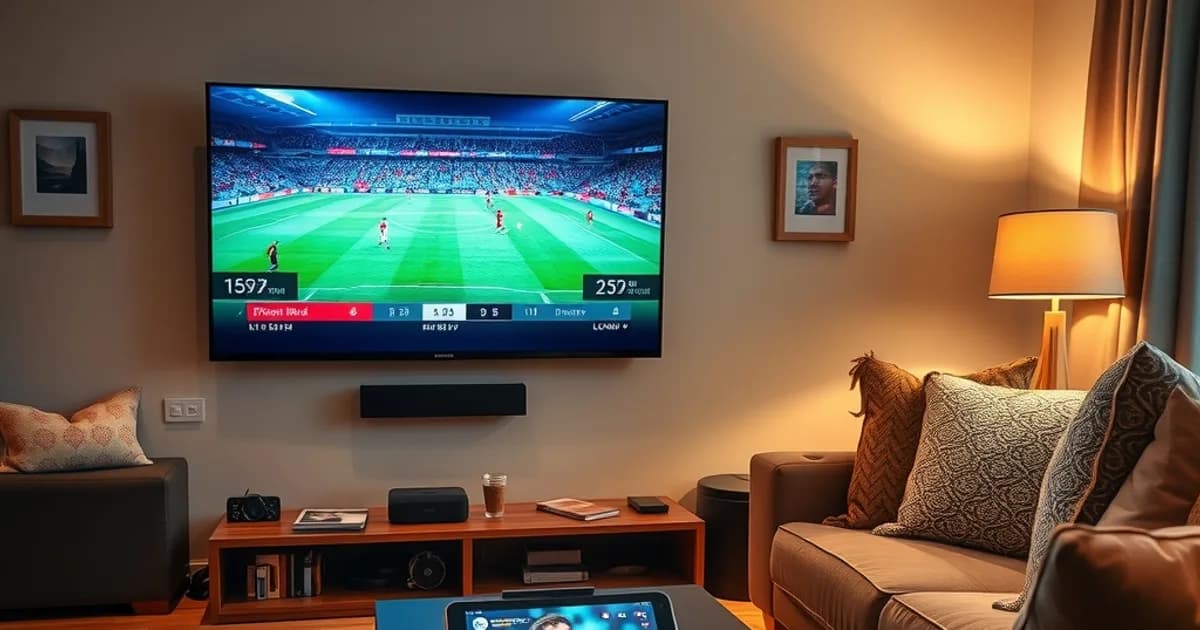
A recent multi-screen comparison test put five UK-facing IPTV providers through the same evening: a live Premier League match running on one screen while a film played on another, at the same time, in the same household. It isn't a hypothetical — it's exactly how most homes actually watch now. The real question was never whether a provider technically "supports" more than one screen; almost all of them claim that. It's whether it holds up without either stream buffering, and whether "multi screen" quietly means a second login, a second card charge, or a second subscription altogether.
This guide answers the questions people actually ask before adding a second or third screen to a British IPTV account: whether one subscription genuinely covers the household, what it costs to add a screen rather than start a fresh plan, and how that stacks up against four other providers UK viewers regularly weigh it against.
Can two screens really run on one British IPTV subscription without buffering?
Yes, provided the plan you choose actually allows it and your home connection has the headroom — the screen count is a setting built into the plan itself, not an afterthought bolted on later. With a two- or three-screen tier switched on, one person can have a live match running on the lounge TV while someone else opens a film from the on-demand library on a tablet, both pulling from the same 20,000-plus-channel line-up without either stream being throttled to make room for the other.
That distinction matters because plenty of services technically "allow" a second screen but treat it as an afterthought: a shared connection that quietly drops quality on the second device the moment the first one is playing something demanding. British IPTV's device tiers exist precisely so the second and third screen aren't stealing from the first — they're priced and provisioned as part of the same plan from the outset, not squeezed in behind it.
Not sure how many screens your household actually needs?
Do I need a separate subscription for every device in the house?
No — and this is the detail that trips people up most. You don't buy a second British IPTV subscription for a second screen; you choose the same plan at a higher device tier, and one login covers however many screens you've paid for, up to three. There's no second account to manage, no second password to remember, and no second order to place.
The numbers make it concrete. On the 3-month Pennine plan, one screen is £24 — add a second and the whole household comes to £43 rather than doubling to £48, and a third screen brings the total to £58, not £72. The same shape holds on every term length: it always costs less to add a screen to an existing plan than it would to buy a second plan outright.
How does British IPTV's screen-based pricing actually work?
Each screen you add is discounted rather than charged in full, so the per-screen cost falls the more of the household is watching. On the 12-month Albion plan — the most-booked term and the one this network's own comparison video called out at £64 — one screen is £64, two screens come to £115 (not £128), and three land at £154 (not £192). Stretch that to the 24-month Sovereign plan and the same logic holds: £104 for one screen, £187 for two, £250 for three.
Practically, that means a couple who start on one screen and later add a second for a spare bedroom, or a family covering the lounge, the kitchen and a teenager's room at once, are never paying a straight multiple of the base price. The plan gets cheaper per screen as the household grows into it, rather than punishing you for wanting more than one room covered.
Is British IPTV worth it if I mostly watch Premier League on the big screen?
Yes, and it's the scenario the multi-screen tiers are really built around. Live sport is the moment a household is most likely to want more than one screen running at once — one person watching the match properly on the main TV, someone else catching a different fixture or a box set elsewhere in the house — and it's also the moment a shaky connection shows itself fastest. A stream that copes fine with one quiet viewer in the evening can behave very differently the second another screen switches on for kickoff.
The practical test is simple and worth running before you commit to any plan: start the match on the main screen, then open something else on a second device, and judge whether either picture drops quality or starts to stutter. That's the real measure of whether a provider's "multi screen" claim holds up, far more than any spec sheet does.
Ready to see the exact price for your number of screens?
How do the other UK-facing multi-screen options compare on price?
Four other providers regularly turn up in the same UK-facing comparisons: Boss IPTV, Apollo Group TV, Marinios IPTV and Kemo IPTV. All four price in dollars rather than pounds and sell a single flat package rather than a published per-screen tier, so a straight pound-for-pound match against British IPTV's device pricing isn't quite apples-to-apples — but the headline 12-month numbers give a sense of where they sit: Boss IPTV and Kemo IPTV both list their 12-month plan at $69, Apollo Group TV at $66, and Marinios IPTV at $63.
None of that tells you how those four handle two screens playing different things at once, because that detail simply isn't published the way British IPTV's device tiers are. If multi-screen viewing without a second bill is the actual requirement in your house — rather than the lowest single-screen number on a page — it's worth asking any provider directly how a second or third screen is metered before you commit, rather than assuming "multi screen" means the same thing everywhere.
Frequently asked questions
Does British IPTV accept PayPal?
Not currently — payment is by card, which works reliably for setting up any plan. PayPal simply isn't one of the accepted methods yet, so have a card ready rather than expecting a PayPal option at checkout.
Can I move from one screen to two or three screens later, or do I have to start a new plan?
You can move up a device tier when you renew or upgrade rather than opening a brand new subscription — message us on WhatsApp and we'll adjust it for you, priced at the same discounted per-screen rate as any other order.
Is there a limit to how many screens one British IPTV account can run?
Three screens is the maximum on a single account. If a household genuinely needs more than that, a second subscription is the honest answer rather than trying to stretch one login past its limit.
Next, see the subscriptions or the FAQ.