Watch Premier League on Roku: IPTV Setup & Streaming 2026/27
3 August 2026 · 8 min read
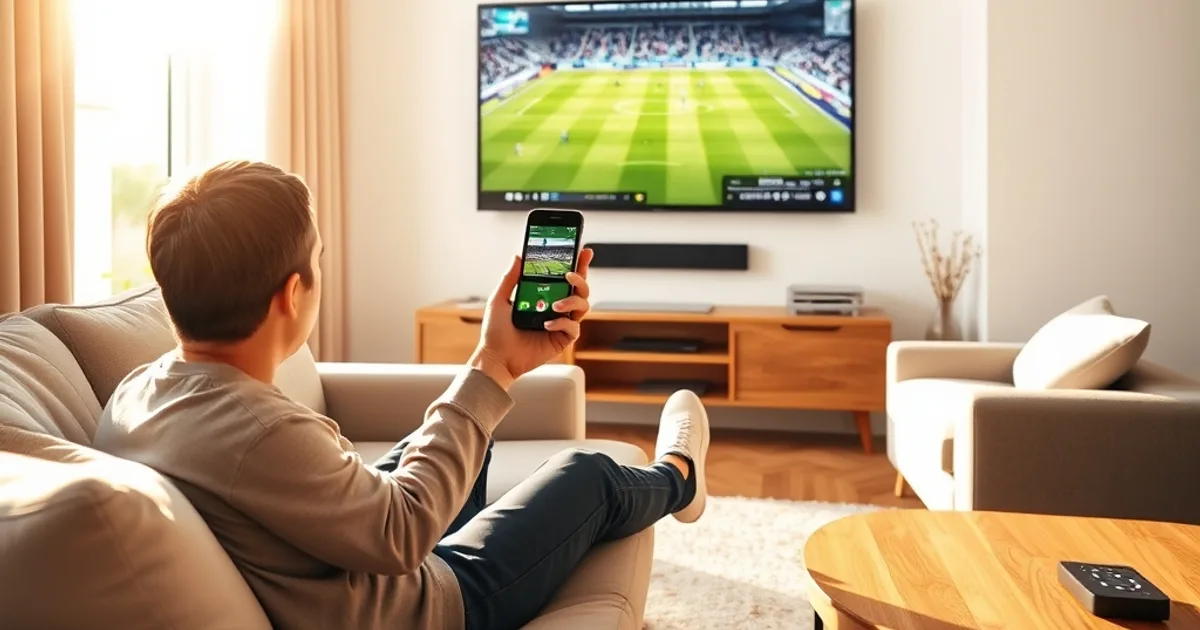
The 2026/27 Premier League season kicks off on Friday, 21 August, and the timing is awkward for one specific group of fans: Roku owners. Roku is the best-selling streaming platform in several markets precisely because it's cheap, simple, and works on almost any TV — but that same simplicity is why it doesn't play nicely with IPTV. Unlike Android TV boxes or Amazon Firestick, Roku doesn't let you install an app from outside its own channel store, and its store carries almost no dedicated IPTV players.
That single restriction is why most "Premier League IPTV" guides quietly skip Roku, and why most "Roku streaming" guides talk about Netflix and screen mirroring in the abstract without ever mentioning what happens when you try to hold a live football stream steady for 90 minutes plus stoppage time. This guide fills that specific gap: how to actually get an IPTV service onto a Roku device, and how to keep it watchable when City are away at Anfield and half the country is streaming the same match.
We'll cover the two real setup routes — casting and mirroring — the honest state of IPTV apps on Roku, and the match-day network tweaks that matter far more on Roku than on a native Android TV box, because Roku is always relaying someone else's stream rather than running the app itself.
Why Roku for Premier League IPTV
Roku's appeal has nothing to do with sport specifically: it's inexpensive, it boots fast, its remote and menus are the least confusing of any streaming platform, and it runs on TVs from several major manufacturers as built-in software as well as on standalone sticks and boxes. For a household that already has a Roku TV or stick sitting under the telly, buying a second device just to watch football is a hard sell.
The trade-off is architectural. Roku's operating system is deliberately closed — you can only install what Roku has approved into its Channel Store, and Roku has never opened the door to the kind of Xtream Codes or M3U-playlist apps that Android TV, Fire TV, and Apple TV all support natively. That's not a bug the platform is fixing; it's a permanent design choice, so the workaround isn't a temporary inconvenience, it's simply how Roku IPTV works.
The upside is that once you understand this, the setup is genuinely reliable — you're not fighting Roku's software, you're using it exactly as intended: as a big, fast, cheap display that receives a stream from another device. If you'd rather sidestep the extra step entirely, our guide on the iptv-uk-firestick-setup-guide covers a device that installs IPTV apps directly, which is worth reading before you commit to Roku for football specifically.
Not sure if your Roku model supports casting or AirPlay for football?
Prerequisites: Choosing an IPTV Provider and Network Requirements
Before any Roku-specific step, you need two things sorted: a provider and a connection that can actually carry a Premier League match in HD or 4K without falling over. We've written a full breakdown of what separates a reliable IPTV provider from a shaky one in best-iptv-uk-how-to-choose — server stability and EPG accuracy matter more for live sport than for on-demand content, because there's no buffer-and-catch-up option when the goal already happened.
On the network side, because Roku will be receiving a relayed stream rather than pulling it directly, you effectively need enough bandwidth for two devices at once: the phone or computer pulling the IPTV stream, and the local hop pushing it on to the Roku. A wired connection on the source device (phone excluded, obviously) and a Roku connected to 5GHz Wi-Fi rather than 2.4GHz will remove most of the headroom problems before kick-off.
It's also worth checking, before matchday, whether your Roku model supports AirPlay 2 or Miracast — this determines which of the two setup methods below is available to you, and not every Roku model supports both.
Setup Method 1: Client-Side Casting from Smartphone to Roku
This is the route most Roku-owning football fans end up using, because it needs no new hardware. On iPhone or iPad, open the IPTV app you already use for other devices, start the match stream, then pull down Control Centre and use Screen Mirroring — but only Roku models that explicitly list AirPlay 2 support (most Roku Ultra units and several 4K-capable Roku TVs from 2017 onward) will show up as a target. If your Roku isn't AirPlay-capable, this method won't work at all, no matter how the app behaves.
On Android, the mechanism is different: Android's built-in "Cast" screen relies on the same Miracast protocol Roku uses for Windows, and most modern Android phones support it directly from the quick-settings panel as "Screen Cast" or "Smart View" depending on the manufacturer skin. Select your Roku from the device list, and the entire phone screen — including your IPTV app's video — is mirrored across.
The practical downside of both approaches is the same: you're mirroring, not casting a dedicated stream, so a phone call, a notification banner, or the screen timing out mid-second-half will interrupt the picture on your TV. Disable notifications and lock-screen timeout on the source device before kick-off, and keep the phone or tablet on charge — mirroring drains battery fast.
Setup Method 2: Mirroring from a Windows PC or a Mac
Windows and macOS reach a Roku through genuinely different technology, and conflating the two is where most generic "PC screen mirroring" guides go wrong. Windows 10 and 11 use Miracast, the same protocol as Android: open the Action Centre, select "Cast," and choose your Roku device by name, provided the Roku supports screen mirroring (most current models do, but very old units may not).
A Mac cannot use Miracast at all — macOS has never supported it. The only route from a Mac to a Roku is AirPlay 2, and it only works if your specific Roku model lists AirPlay 2 support. If it does, open your IPTV player in a browser or app on the Mac, use the AirPlay icon in the menu bar or the relevant app, and select the Roku as the output. If your Roku predates AirPlay support, a Mac simply has no built-in path to it — a phone using method one, or a different streaming device, becomes the more realistic option.
Either way, a laptop generally gives more stable IPTV playback than a phone for this purpose, because the larger screen makes stream-quality issues easier to spot before kick-off, and a wired Ethernet connection into the laptop removes one whole hop of Wi-Fi contention from the chain.
Best IPTV Apps for Roku and Casting Workarounds
Here's the honest answer competitor guides tend to dodge: there is no meaningful list of "best IPTV apps for Roku," because the major IPTV players — the ones with proper Xtream Codes and M3U support, EPG grids, and multi-screen features — simply don't have Roku versions. Roku's Channel Store is curated tightly enough that this category of app has never been approved onto it, and that isn't likely to change.
What that means practically is that the app choice happens on the source device, not on the Roku. Pick whichever IPTV player your provider recommends for iOS, Android, or desktop, get comfortable with its channel list and EPG there, and treat the Roku purely as the screen at the end of the chain. Judge the source app on stability and channel-switching speed rather than on whether it happens to have a Roku build, because none of the serious ones do.
The one thing worth checking on the Roku side itself is that the Roku Channel Store search returns nothing misleadingly named as an "IPTV player" for your provider — generic apps claiming IPTV compatibility in the store are almost never affiliated with any specific service and are a common source of confusion, not a shortcut around casting.
Optimizing for Match Days: Buffering Prevention and Network Tips
Match-day buffering on a mirrored Roku setup has a specific cause profile that's different from buffering on a native app: because the stream is being decoded on your phone or laptop and then re-encoded for the mirror, any strain on the source device shows up on the TV a beat later. Close background apps on the source device before kick-off, and if it's a phone, put it in airplane mode with Wi-Fi re-enabled to stop background data syncs competing for bandwidth mid-stream.
Router placement matters more for this setup than for most streaming scenarios, because you effectively need two stable device connections running simultaneously — the source device and the Roku. If either is on the edge of Wi-Fi range, that's where buffering will show up first, so move the router (or add a mesh node) so both devices sit well within a strong 5GHz signal.
For the specific case of a full Premier League slate — Saturday 3pm-adjacent kick-offs, or a midweek round with several matches overlapping — expect the heaviest regional network congestion in the ten minutes either side of kick-off, when everyone's stream is starting at once. Starting your own stream two or three minutes early, before that surge peaks, often avoids the worst of it entirely.
If you're travelling and trying to keep the same setup working from outside the UK, the concerns are different again — geo-restrictions and provider access take priority over local network tuning, and we cover that scenario separately in watch-british-tv-abroad-expats.
Common Roku IPTV Issues and Troubleshooting
The most frequent complaint isn't picture quality, it's the mirror simply refusing to start: this is almost always either an AirPlay-incompatible Roku model being asked to accept an iPhone mirror, or a Miracast handshake failing because the Roku and the source device are on different Wi-Fi bands (2.4GHz vs 5GHz can prevent discovery entirely on some routers). Confirm both devices are on the same network and band before assuming the IPTV stream itself is at fault.
A second common issue is audio drifting out of sync with picture after twenty or thirty minutes of mirroring — this is a symptom of the source device's processor being under load, not the IPTV feed. Restarting the mirror session resets it, and closing unnecessary background apps on the phone or laptop beforehand usually prevents it recurring for the rest of the match.
Third: if the Roku shows a black screen with audio still playing, that's typically an HDCP or resolution-negotiation hiccup between the mirrored output and the TV, and it usually clears by ending the mirror session and reconnecting, or by dropping the source device's cast resolution one notch before kick-off.
Get your Roku match-ready before the Premier League opener kicks off.
Switching Between Channels and International Feeds Fast
Because Roku isn't running the IPTV app natively, channel switching happens entirely on the source device, and the Roku simply displays whatever's on that screen — so switching feeds fast is a matter of how your source app's EPG and favourites list are organised, not anything Roku-specific. Build a favourites shortlist in the source app before kick-off — your primary UK broadcast feed alongside one or two international alternates — so a mid-match switch is a two-tap job rather than a scroll through a full channel list.
This matters more on Roku than on a native Android TV box specifically because every switch is a re-mirror moment: closing one channel and opening another briefly interrupts the cast, so minimising how often you need to hunt for a channel reduces the number of black-screen instants during the match. Pre-loading two tabs or two picture-in-picture-ready streams on the source device, where the app supports it, avoids the interruption entirely.
If a specific feed proves unreliable on a given matchday, having the alternate already bookmarked — rather than discovering mid-match that you need to search for one — is the difference between missing a build-up and missing the goal itself.
Frequently asked questions
Can I install an IPTV app directly on Roku, like on Firestick or Android TV?
No — Roku's Channel Store doesn't carry dedicated Xtream Codes or M3U-based IPTV players, and Roku doesn't allow installing apps from outside its own store. Casting or mirroring from a phone, tablet, or computer is the only route.
Does every Roku model support AirPlay or screen mirroring?
No. AirPlay 2 support is limited to specific Roku Ultra units and select Roku TVs from 2017 onward; Miracast-based screen mirroring for Android and Windows has broader but still not universal support. Check your exact model's spec sheet before relying on either method for kick-off.
Can I mirror an IPTV stream from a Mac to Roku?
Only via AirPlay 2, and only if your Roku model supports it. macOS doesn't support Miracast, so there's no alternative mirroring path from a Mac — if your Roku predates AirPlay 2 support, a Mac has no built-in way to reach it.
Why does my Roku IPTV stream buffer more than on my phone alone?
Mirroring adds a re-encoding step and a second device connection into the chain, so any strain on the source device's processor or Wi-Fi signal shows up as buffering on the Roku a moment later. Closing background apps and keeping both devices on strong 5GHz Wi-Fi resolves most cases.
When does the 2026/27 Premier League season start?
The season opens on Friday, 21 August 2026, with the full 380-fixture schedule already released. Test your Roku casting or mirroring setup at least once before then rather than for the first time on matchday.
Is a Firestick simpler than Roku for Premier League IPTV?
For IPTV specifically, yes — Firestick allows direct app installation, removing the casting step entirely. If you're not already committed to a Roku device, our iptv-uk-firestick-setup-guide walks through that more direct route.
Next, see the subscriptions or the FAQ.